AI Answer Engines Are Rewriting Ecommerce SEO in 2026
AI answer engines now decide a growing share of product research before a shopper ever reaches a results page. Google AI Overviews, ChatGPT and Perplexity read the web, synthesize a recommendation, and name a handful of stores as their sources. That changes the job of ecommerce SEO: ranking still matters, but the new prize is being the store the answer cites. The good news is that the work overlaps heavily with SEO done properly: clear structured data, honest and specific product pages, and content that genuinely answers buying questions. This article walks through what shifted, why citability is the new metric, and exactly what to do about it on a Shopify store.
Gyllion Redout · August 13, 2026
What actually changed in how shoppers find products?
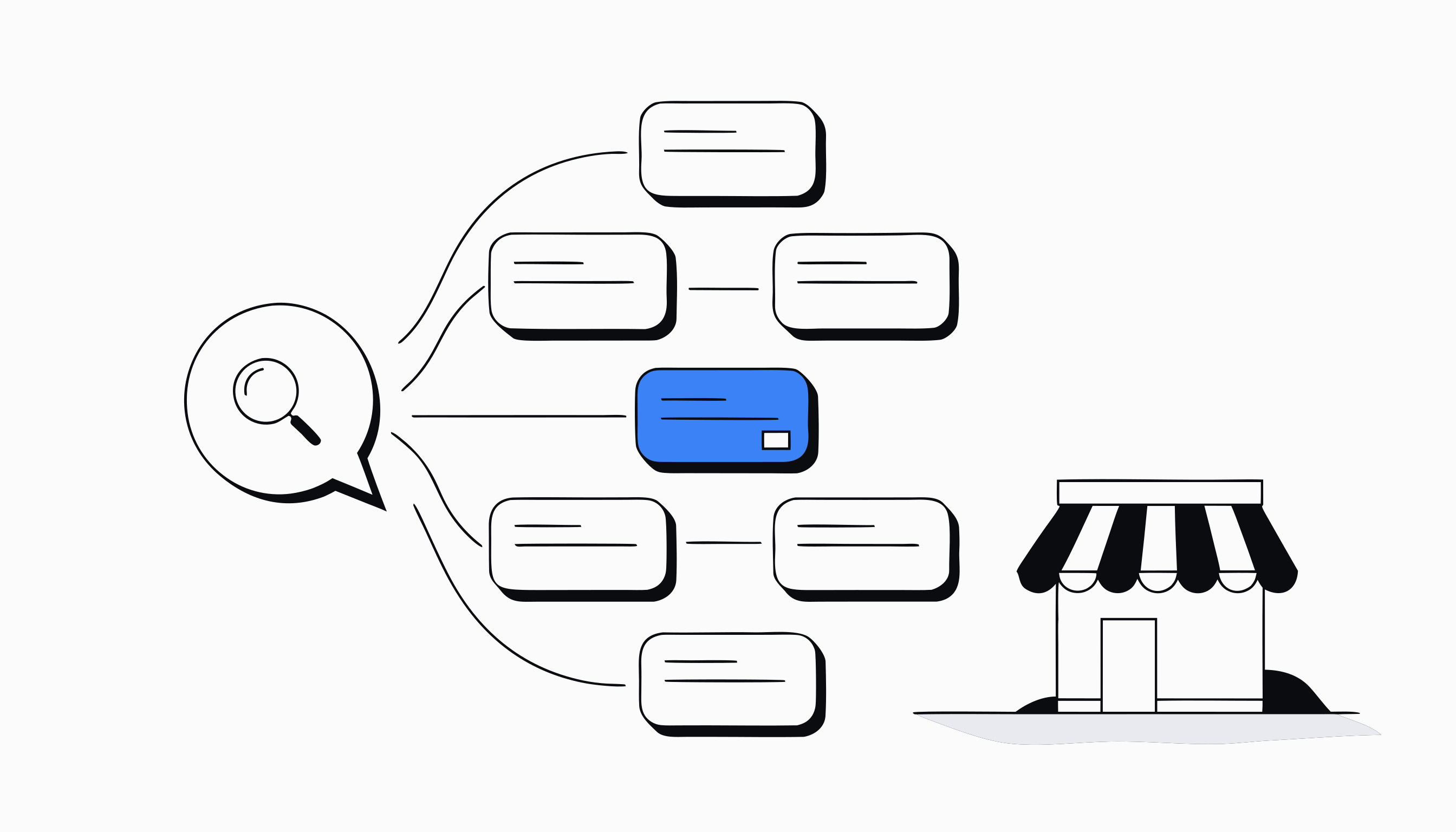
The change is that the search result is increasingly a written answer, not a list of links. When a shopper asks Google a buying question, an AI Overview can appear above every organic result, summarizing the answer and linking to a small set of sources. When the same shopper asks ChatGPT or Perplexity which product to buy, there is no results page at all: the assistant composes a recommendation and cites or names the stores and articles it drew from.
This matters most exactly where ecommerce SEO used to win: informational and comparison queries. Questions like which material lasts longer, what size to order, or which product fits a specific need used to send a click to whoever ranked first. Now an engine can answer the question itself and send the click only to the sources it trusted enough to cite.
None of this makes classic search irrelevant. Shoppers still search, and answer engines still lean on the same underlying index: pages that rank well and read clearly are the pages these systems pull from. What changed is the shape of the funnel above the click, and who gets counted as a source.
Why does being citable beat ranking alone?
Because when the answer is synthesized, position stops being the only currency: the engine chooses a few sources to quote or name, and everyone else is invisible inside that answer regardless of where they rank. A store sitting in fourth position used to get real traffic. Inside a synthesized answer, a store that is not cited gets nothing from that query, and a store that is cited inherits trust from the engine itself.
Citability is earned differently from rank. Answer engines reward pages that state facts plainly and specifically: a page that says exactly what a product is made of, who it fits, what it costs and what its limits are gives the engine something safe to quote. Vague marketing copy gives it nothing to extract, so it quotes someone else.
This also raises the value of being the recognized authority on a narrow topic rather than a thin participant in a broad one. An engine composing an answer about a specific product category will reach for the source that covers that category in depth, with consistent facts across its pages. A cluster of genuinely useful pages on one subject beats scattered pages on twenty.
What does structured data contribute in AI search?
Structured data is how you hand an engine your facts in a form it cannot misread. Schema.org markup for products declares the name, price, availability, brand, ratings and shipping details as machine readable statements. A parser extracting product information from your page does not have to infer your price from prose; you told it directly.
For a Shopify store the starting point is usually decent: most modern themes emit basic Product markup out of the box. The gaps appear at the edges, and they are worth auditing. Check that every variant's price and availability are represented, that review markup reflects real reviews on the page, that your organization and site markup identify the brand consistently, and that FAQ or article markup exists where you actually answer questions. Google's Rich Results Test and Search Console's structured data reports will show you what an engine can currently read.
One honest caveat: markup is a clarity layer, not a ranking trick. It does not make weak content citable. What it does is remove ambiguity, so that when an engine does consider your page as a source, nothing about your core facts is left to guesswork.
Why do honest, specific product pages win with answer engines?
Because an answer engine's core risk is saying something wrong, it gravitates toward sources that are precise, verifiable and internally consistent. A product page that names exact dimensions, materials, care instructions, compatibility and honest limitations reads as a reliable source. A page of superlatives and unverifiable claims reads as noise, and engines are specifically built to filter noise.
Honesty is also self reinforcing across a catalogue. If your product pages, your buying guides and your FAQ all state the same facts the same way, an engine cross checking your site finds agreement, which is exactly what these systems look for before citing. If your marketing page contradicts your spec table, you have given it a reason to look elsewhere.
The practical rewrite is straightforward: lead each page with what the product is and who it is for, put specifications where they can be parsed as text rather than baked into images, answer the real pre purchase questions on the page itself, and cut every claim you could not defend to a customer's face. That page converts better for humans too, which is not a coincidence.
What should a Shopify store owner actually do this month?
Treat this as an audit and a writing plan, not a platform migration. Everything below runs on your existing store and compounds with the SEO work you should already be doing, and none of it requires new software or a redesign.
- Ask the engines about your own niche. Put your real buying questions into Google, ChatGPT and Perplexity, note which stores get named, and read the cited pages. That is your competitive benchmark, and it is free.
- Audit your structured data. Run key templates through Google's Rich Results Test and Search Console, then fix missing or inconsistent Product, Offer, review and FAQ markup.
- Rewrite your top product pages for extraction. Specifications in real text, honest and specific claims, sizing and compatibility answered on the page, and no facts locked inside images.
- Answer real questions in your content. Build pages and articles around the questions your customers actually ask before buying, phrased the way they ask them, each with a direct answer in the first sentence.
- Build topical depth, not scattered posts. Concentrate content on the categories you genuinely know, and link related pieces together so both crawlers and engines can see the cluster.
- Keep your feeds and merchant listings accurate. Answer engines increasingly draw on shopping data, so your product feed's prices, availability and identifiers should match your pages exactly.
- Do not block AI crawlers reflexively. Review your robots.txt and make a deliberate choice; a store that wants citations from answer engines has to be readable by them.
- Recheck monthly. Assistant answers shift as models and indexes update, so the benchmark you took in step one is a recurring measurement, not a one time snapshot.
How does Zyberon's SEO tool handle this?
Zyberon treats AI visibility as something you measure and then work toward, in the same place. The AI Visibility check in the SEO tool tests whether assistants name your store when your customers ask them for products like yours, and shows who gets named instead. That turns a vague worry into a concrete target: you can see the exact competitors an assistant currently recommends in your niche.
The path to closing that gap runs through the same suite. Opportunities ranks the demand worth chasing by the questions your catalogue can answer better than anyone, Generate Blogs writes the articles and queues each one for your review, the Pages builder assembles category hubs from the products you actually stock, and Internal Links wires the cluster together. That cluster building is the same work that earns assistant mentions over time, so the fix and the measurement live side by side.
Two things keep it honest. Every article and page starts from your own catalogue and brand profile rather than a generic template, which is precisely the specificity answer engines reward. And nothing ships on its own: every change is a proposal you approve or skip, the Site Audit keeps checking technical health, and daily Rankings with per country Markets tracking tell you whether the work actually moved anything.
- AI Visibility check: tests whether AI answer engines name your store for real buying questions
- Opportunities and Generate Blogs: ranks the demand and writes the articles that answer it
- Pages and Internal Links: builds category hubs and wires the cluster together
- Site Audit and Rankings: checks technical health and tracks movement per market
What stays the same, and what is the real takeaway?
The fundamentals did not change; the scoreboard did. Answer engines are built on top of the same web that classic search indexes, so a technically healthy store with genuinely useful, specific content wins in both worlds. Nothing in this shift rewards a shortcut that traditional SEO would have punished.
The takeaway for 2026 is to add one question to your SEO practice: when an engine composes the answer to my customer's question, am I a source it can safely quote? Structured data makes your facts unambiguous, honest product pages make them trustworthy, and focused content makes you the authority worth naming. Start with the audit, benchmark what the assistants say about your niche today, and measure again next month.
How this compares to the tools you are weighing
Semrush
- What it does well
- Semrush gives deep keyword research, backlink analysis, and competitive data across almost any market.
- Where it stops
- Semrush surfaces the data and the recommendations, but a person still has to write the content, fix the technical issues, and publish the change to the store.
- What Zyberon does instead
- Zyberon's SEO tool ranks the opportunities, writes the articles, builds the pages, and proposes the fixes directly against your own Shopify store, not a separate report to act on later.
Ahrefs
- What it does well
- Ahrefs has one of the largest backlink indexes available, plus strong site audit and rank tracking tools.
- Where it stops
- Ahrefs reports on what is happening on your site and your competitors, but it does not generate the on page content or execute the fix itself.
- What Zyberon does instead
- Zyberon's Site Audit checks technical health and daily Rankings track movement by market, and the same suite writes the articles and proposes the fixes it finds.
A content agency retainer
- What it does well
- A content agency retainer brings dedicated writers and an editorial process built for consistent output.
- Where it stops
- An agency retainer is a recurring cost independent of output, and every article or page change still waits on a brief, a draft, and a review cycle.
- What Zyberon does instead
- Zyberon's Generate Blogs writes articles from your own catalogue and brand profile and queues each one for your review, inside the same tool that finds the demand worth writing about.
Questions this raises
Is traditional SEO dead for ecommerce in 2026?
No. Answer engines draw on the same web index that classic search uses, so pages that rank and read clearly are the pages engines cite. What changed is that ranking alone no longer guarantees the click: you also want to be a source the synthesized answer names.
Does Shopify handle structured data for me?
Partly. Most modern themes emit basic Product markup, but gaps are common around variant pricing, availability, reviews and FAQ content. Run your key templates through Google's Rich Results Test and check Search Console to see exactly what engines can read today.
How do I find out whether AI assistants recommend my store?
Ask them your customers' real buying questions and note which stores get named, then repeat monthly because answers shift as models update. Zyberon's SEO tool includes an AI Visibility check that runs this test for you and shows which competitors assistants name instead.
Should I block AI crawlers in robots.txt?
Make it a deliberate choice rather than a reflex. If you want citations and mentions from answer engines, they need to be able to read your store. Blocking them protects your content from reuse but also removes you from the answers your customers are reading.
What is the single highest value change I can make this week?
Rewrite your top selling product pages for extraction: specifications in real text instead of images, honest and specific claims, and the real pre purchase questions answered directly on the page. It improves citability, classic rankings and conversion at the same time.
Read next
Shopify SEO Tools Compared: What Each One Actually Solves
A category by category comparison of Shopify SEO tools, including Semrush, Ahrefs and Surfer SEO, and which job to solve first.
AI Visibility Tracking: What to Measure Instead of Rank
Rank tracking cannot tell you if AI Overviews or ChatGPT ever cite your store. What AI visibility tracking should measure instead, and how to test it.
A Meta Ads Creative Testing Cadence for Shopify Stores
A meta ads creative testing cadence for Shopify: how many concepts to run each week, how many variants each needs, and exactly when to kill a loser.